If you are shopping for image creation services, the decision feels deceptively simple until you realize how much is riding on it. The visuals tied to your brand shape first impressions on your website, Google Business Profile, social media feeds, and every piece of content your business publishes. Choosing the right image creation provider is not just a creative decision; it is a business one. This post walks you through every factor worth weighing before you commit.
What Image Creation Actually Covers
Before evaluating providers, get clear on what you actually need. Image creation is a broad term. It can mean custom photography, graphic design, AI-generated visuals, branded social media graphics, infographics, website hero images, or product mockups. The best providers will ask you about your use cases before quoting anything. If a provider jumps straight to price without understanding your brand or channels, that is a red flag.
At Websza, we handle image creation as part of a wider content system. That means the images we produce are built to support blog posts, social media posts, web pages, and Google Business Profile updates simultaneously. Standalone images created in a vacuum often end up visually inconsistent across platforms, which quietly erodes trust with potential customers.
How to Choose the Right Image Creation Provider
This is the core question, and the answer depends on five factors: output quality, brand consistency, turnaround time, revision policy, and how well image production integrates with your other marketing work. Evaluate every candidate against all five, not just the ones that are easiest to judge from a portfolio.
Output Quality
Ask to see recent work produced for clients in your industry or in adjacent industries. Generic stock-style images are easy to produce and easy to recognize. What you are looking for is whether the provider can produce images that look like they belong to a specific brand. Resolution, color grading, composition, and typography choices all signal professional quality. If their samples look like they could belong to any business, they probably will not do yours justice either.
Brand Consistency
A single great image is not enough. You need a provider who can maintain a coherent visual language across dozens or hundreds of pieces over time. Ask whether they build and document a visual style guide for each client. Ask how they handle onboarding a new brand. Providers who take brand consistency seriously will have a process for capturing your colors, fonts, tone, and visual preferences before producing anything.
Turnaround Time
Content marketing runs on a schedule. If your blog post goes live on Tuesday and the image is not ready until Thursday, the whole system breaks down. Clarify expected turnaround time for standard requests and rush requests. Also ask what happens when you need something fast, whether there is a clear escalation path or whether you are stuck waiting in a queue.
Revision Policy
Most image creation work requires at least one round of feedback. Ask how many revisions are included, what counts as a revision versus a new request, and how feedback is submitted. Vague revision policies are a frequent source of conflict and unexpected charges. A good provider spells this out in writing before work begins.
Integration With the Rest of Your Marketing
This is the factor most small business owners overlook. Images do not exist in isolation. They support blog posts, social captions, website pages, and ad campaigns. A provider who only hands you a file and disappears leaves you to figure out the rest. The most efficient setup is one where image creation is part of a broader content production and distribution system. That is exactly how we structure things at Websza, where images are produced alongside the blog posts, social updates, and web pages they are meant to support.
AI-Generated Images vs. Human-Designed Graphics: What Small Businesses Should Know
AI image generation has changed what is possible for small business marketing budgets. Tools that once required a professional illustrator can now produce usable visuals in seconds. But fast and cheap do not automatically mean right for your brand. Here is an honest breakdown.
AI-generated images are best suited for editorial illustrations, blog post headers, and social media content that prioritizes volume and speed. They can produce a wide range of styles and are cost-effective for businesses that need a high volume of visuals regularly. The trade-off is that they require skilled prompting and curation to look polished. Without someone who knows what they are doing, the output can look generic or off-brand.
Human-designed graphics are better suited for anything where brand precision matters most: logos, website hero sections, print materials, and any asset that will be seen by a large audience repeatedly. A skilled designer brings judgment that an AI prompt cannot fully replicate, especially when the brief involves nuance or a highly specific visual direction.
At Websza, we use a combination of both, applying AI-powered generation where it serves speed and volume, and human creative judgment where precision and brand integrity are the priority. The result is a system that produces more visuals, faster, without sacrificing quality on the assets that matter most.
Red Flags to Watch for When Evaluating Providers
Speed-reading a provider’s website is not enough. Here are the warning signs that a provider is likely to underdeliver.
- No portfolio or vague samples. If they cannot show you recent work they are proud of, that tells you something.
- One-size-fits-all pricing with no discovery call. Image creation for a local plumber looks different from image creation for an e-commerce brand. Providers who skip that conversation cannot price the work accurately.
- No mention of brand guidelines or onboarding. Without a documented visual style, every batch of images will drift from the last one.
- Promises of unlimited revisions. This sounds like a benefit but often means low-priority service. Real quality work has a defined creative process, not an open-ended revision loop.
- No clear ownership or licensing terms. Make sure you understand who owns the images you pay for, especially if AI tools are involved in production. This should be spelled out in the contract.
Questions to Ask Before You Sign Anything
Walk into any provider conversation with these questions ready. The quality of the answers will tell you more than any sales page.
- What is your onboarding process for a new brand?
- How do you maintain visual consistency across a large volume of images?
- Who owns the files and source assets once the project is complete?
- How do you handle AI-generated content in terms of licensing and disclosure?
- Can image production be bundled with content writing, SEO, or social media management?
- What does your revision process look like, and what happens if we are not happy with the first round?
- Who is my point of contact, and how do I submit requests?
You are not being difficult by asking these questions. You are doing your job as a business owner. Any provider worth working with will answer them confidently and in detail.
Why the Provider’s Overall Marketing Stack Matters
One thing we see repeatedly is small businesses that piece together their marketing from five or six different vendors: one for web design, another for SEO, another for social media, another for images. The result is a fragmented presence where nothing quite matches, timelines clash, and nobody takes ownership of the whole picture.
When image creation sits inside a full-service marketing system, the work is faster, more consistent, and more effective. Your website design team knows what image formats the site needs. Your SEO team knows which pages need supporting visuals for content quality. Your social media manager knows the image dimensions and post cadence. Everything fits because it is built together. If you want to understand how this kind of integrated approach works for home service businesses specifically, our page on SEO for home service businesses shows how content and visibility work together. Similarly, our approach to website design for contractors shows how images feed directly into site performance and conversion.
For businesses that also want to understand how image quality plays into overall lead generation, our lead generation for local businesses page covers the connection between visual credibility and conversion in more depth.
If you want to understand what professional brand guidelines and image use look like from a recognized design perspective, the American Institute of Graphic Arts (AIGA) publishes useful guidance on professional design standards that applies directly to what you should expect from any image creation provider.
Making the Final Call
After you have reviewed portfolios, asked the hard questions, and compared pricing, the final decision usually comes down to trust. Trust that the provider understands your brand, can maintain consistency at scale, and will flag problems before they become expensive mistakes. The cheapest option and the flashiest option are rarely the right one. The right one is the provider that has a clear process, a track record of consistent work, and the capability to grow with your business.
If you are evaluating whether Websza’s image creation fits what your business needs, the most useful next step is a look at what is and is not working in your current online presence. Our free SEO audit gives you a grounded starting point. It covers your website, your content gaps, and your visual presence, so any conversation about image creation starts from a real assessment of where you stand rather than a generic sales pitch.
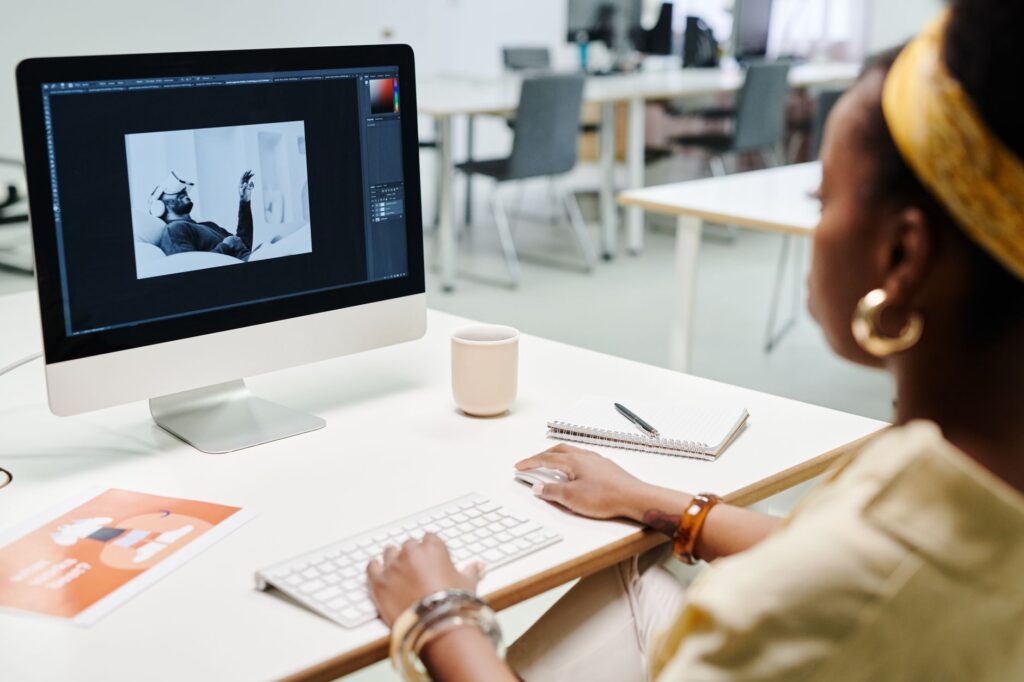
Photo by Darlene Alderson on Pexels.